
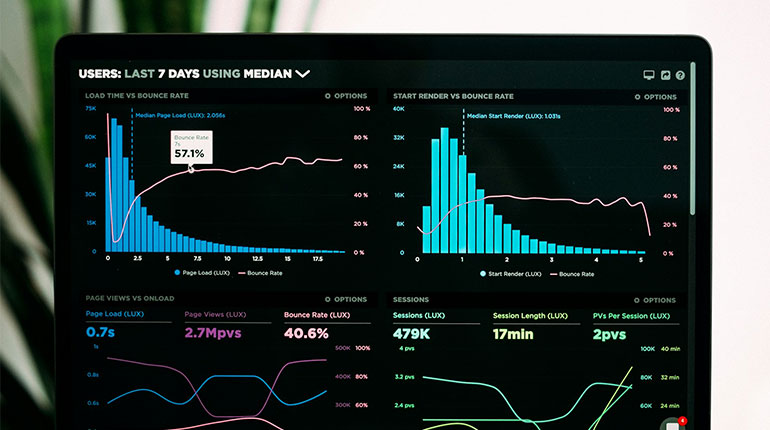
In today’s digital economy, organizations generate vast amounts of data. This includes customer transactions, operational metrics, clinical records, and financial signals. However, the challenge is no longer collecting data but transforming it into actionable insights. As a result, data analytics has emerged as a critical tool for this shift. Specifically, it enables organizations to move beyond intuition and make decisions based on evidence, patterns, and predictive insights.
Across industries, analytics is improving efficiency, reducing risk, and unlocking new revenue opportunities. Consequently, data-driven decision-making has become a defining characteristic of modern organizations. For example, it supports supply chain optimization in retail, improves patient outcomes in healthcare, and helps manage risk in finance.
The Role of Data Analytics in Modern Decision-Making
At its core, data analytics involves examining raw data to identify trends, relationships, and insights that support better decisions. According to the National Institute of Standards and Technology (NIST), analytics-based measurement and analysis help reduce uncertainty. These approaches also support more consistent and reliable system outcomes, which improve overall performance.
Rather than relying solely on historical reporting, modern analytics incorporates real-time data, predictive modeling, and scenario analysis. This shift allows organizations to anticipate challenges, test strategies, and respond more quickly to changing conditions.
Retail: Improving Efficiency and Customer Experience
Notably, the retail industry has been one of the earliest adopters of data analytics. In practice, organizations use insights to understand customer behavior, manage inventory, and optimize pricing strategies. Meanwhile, data from the U.S. Census Bureau shows the growing role of e-commerce in retail, reflecting how digital sales channels continue to reshape the market.
Today, retailers use analytics to:
- Forecast demand and reduce overstock or stockouts
- Personalize marketing and product recommendations
- Optimize pricing and promotions
- Improve supply chain visibility and logistics efficiency
Additionally, academic research in operations and management science highlights this advantage. Data-driven retailers can respond more effectively to seasonal trends and shifts in consumer demand. By leveraging analytics, retailers can better align inventory and pricing decisions with real-world purchasing behavior. In turn, this can increase revenue while reducing operational waste.
Healthcare: Enhancing Outcomes and Operational Performance
Similarly, in healthcare, data analytics is transforming both clinical decision-making and operational efficiency. Agencies such as the Centers for Disease Control and Prevention (CDC) collect, analyze, and share public health data. This data is used to monitor disease trends and inform health decisions and programs.
Healthcare organizations use analytics to:
- Identify high-risk patient populations
- Improve diagnosis and treatment planning
- Reduce hospital readmissions
- Optimize staffing and resource allocation
According to the U.S. Department of Health and Human Services, data-driven approaches support the shift toward value-based care. These approaches enable providers to focus on patient outcomes rather than volume. By using analytics to identify risk and monitor performance, healthcare organizations can improve outcomes while managing costs more effectively.
Finance: Strengthening Risk Management and Strategic Planning
The financial services industry relies on data analytics to manage risk, support regulatory compliance, and strengthen supervisory oversight. Institutions such as the Federal Reserve emphasize the importance of data-driven analysis in monitoring financial conditions and maintaining system stability.
In finance, analytics supports:
- Credit risk assessment and loan decisioning
- Market trend analysis and forecasting
- Regulatory reporting and stress testing
- Risk monitoring across complex portfolios
Moreover, advanced analytics enables financial institutions to evaluate large and complex datasets more efficiently. This capability improves responsiveness to market changes and emerging risks, supporting both institutional resilience and regulatory confidence.
Cross-Industry Benefits of Data Analytics
While use cases vary by industry, the benefits of analytics are consistent across sectors:
- Better decision accuracy: Data reduces reliance on guesswork and subjective judgment.
- Improved efficiency: Analytics identifies inefficiencies and process bottlenecks.
- Faster response times: Real-time insights enable quicker, more confident decisions.
- Revenue growth: Organizations can identify new opportunities and optimize pricing or services.
Supporting this point, research published by the Organisation for Economic Co-operation and Development (OECD) highlights the role of data-driven innovation. It shows how effective use of data can strengthen organizational adaptability and resilience. The OECD notes that organizations leveraging data effectively are better positioned to respond to change. They are also more likely to sustain performance in dynamic economic conditions.
Conclusion
Ultimately, technology alone does not guarantee better decisions. Instead, successful analytics adoption requires strong data governance, skilled personnel, and a culture that values evidence-based decision-making. Organizations that embed analytics into everyday decision processes gain a clear advantage. They innovate, compete, and grow more effectively in an increasingly data‑centric world.
To learn more, explore how SMS Datacenter’s data analytics consulting services can help. Contact us today at [email protected] or 949-223-9220.